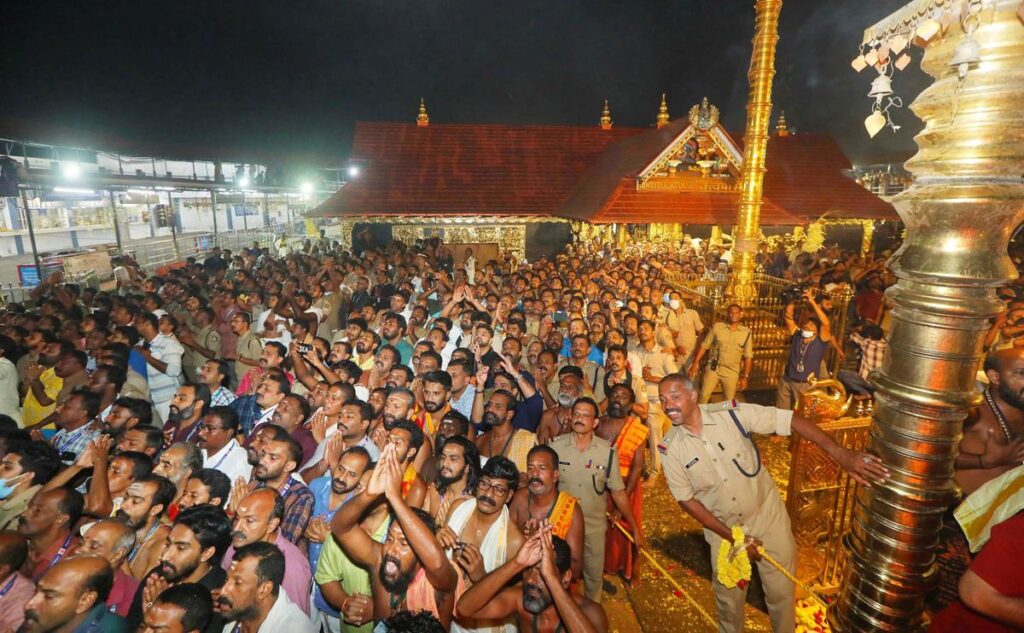
When faith gathers millions, cities rise overnight.
From Gaya to Ayodhya, devotion runs on invisible logistics.
Every few years, India does something the world still struggles to understand.
It builds functioning cities for millions of pilgrims on land that, just weeks earlier, was either a riverbank, an open field, or a small town with barely the infrastructure to hold a football crowd. The scale is staggering. The speed is unmatched. And the system, though fragile, is a kind of soft power India doesn’t talk about enough.
The Kumbh Mela is the most famous example. A pop-up city the size of Manhattan is built on the floodplains of the Ganga – complete with 289 km of roads, 22 floating bridges, police stations, fire stations, hospitals, sanitation grids, and even a postal service. For six weeks, it is India’s largest city. Then it disappears.
But the Kumbh isn’t unique.
Gaya’s Pitru Paksha requires kitchens, water systems, and sanitation networks for lakhs of families performing rituals for their ancestors.
Navratri in Gujarat forces cities like Vadodara and Ahmedabad to expand electricity, transport, and security operations overnight.
Ayodhya’s Ram Mandir inauguration in 2024 became a security and infrastructure marathon-new roads, VIP enclosures, helipads, and crowd-control corridors built just for the event.
Attukal Pongala in Kerala turns an entire city into the world’s largest women’s gathering, with cooking fires on every street.
Kanchi Athi Varadar Utsav in 2019 saw a crore devotees in under 50 days, testing whether a historic town could function like a modern capital.
Each of these is less a ritual, more a stress test of India’s capacity to design and dismantle infrastructure at breakneck speed.
On the surface, these systems are astonishing.
Pop-up hospitals treat heatstroke, dehydration, and accidents.
AI surveillance monitors crowds for early signs of stampede.
Modular kitchens feed 300,000 people daily with near military precision.
Floating bridges carry millions safely across rivers.
But behind the spectacle, cracks are easy to spot.
Stampedes remain one of India’s darkest festival risks, with the 1954 Kumbh tragedy still haunting planners.
Waste and pollution leave scars – Kumbh 2019 alone produced more than 20,000 tons of garbage.
Inequality is built in: VIPs get air-conditioned tents and private corridors, while poorer pilgrims queue in mud for hours.
Rural festivals, despite pulling massive crowds, often get bare-minimum safety and medical systems.
So yes, we’ve mastered scale. But equity and sustainability remain unsolved.
Why This Matters Beyond Ritual
This isn’t just about devotion. It’s about what India proves it can do when urgency and collective will align.
If we can design cities for millions of pilgrims in days, why can’t we replicate that same agility for:
disaster relief during floods and earthquakes,
migrant housing during sudden urban crises,
or even climate resilience projects for communities displaced by rising seas?
The truth is: temporary temple infrastructure isn’t just religious. It’s civic innovation hiding in plain sight.
The Opinion That’s Hard to Ignore
India’s pop-up festival infrastructure is one of the country’s quietest superpowers.
It shows what’s possible when bureaucracy, technology, and community actually move in sync. But it also exposes our blind spots, how inequality is normalized, how sustainability is sidelined, how VIP culture undermines the spirit of collective devotion. Until those are fixed, these festivals will remain miracles on the surface, and missed opportunities underneath.
Because feeding, sheltering, and protecting millions of strangers is not just divine work. It is infrastructure pushed to the edge of possibility, something India already knows how to do better than most nations.
What’s one change you’d make to improve festival infrastructure across India?Write to me.