The Festival That Moves ₹1 Lakh Crore
Every modak, every mandal – someone’s livelihood is inside it.
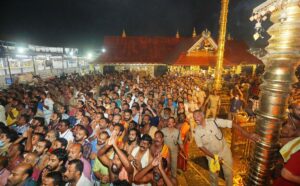
Walk through Mumbai’s Lalbaugcha Raja during Ganesh Chaturthi and you’ll see devotion. But look closer, and you’ll see something else too: an entire economy in motion. Faith is not just celebrated here it creates livelihoods, sustains small businesses, and powers local economies.
The Invisible Economy of Ganesh Utsav
Behind every light, chant, and murti (idol) lies an ecosystem that silently keeps moving:
- Maharashtra alone records ₹25,000+ crore of economic activity during the 10-day festival.
- Pan-India, this figure climbs to ₹1 lakh crore – more than the annual budgets of some states.
- From sweet shops and flower stalls to bamboo suppliers and security guards, every rupee spent circulates back into community livelihoods.
Pen: The Idol Town That Runs on Faith
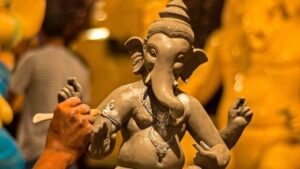
Pen, a small town near Mumbai, doesn’t just make murtis (idols) – but lives on it.
- Entire families work year-round to shape, paint, and dry Ganesh murtis.
- Together, they drive a ₹500 crore industry.
- For many households, sales during these 10 days decide the financial stability of the next 12 months.
In 2023, Pen earned a Geographical Indication (GI) tag for its handcrafted Ganesh murtis celebrated worldwide for their artistry and cultural depth. The region houses approximately 150,000 idol-making units, employing around 200,000 people during the festival season.
Side Hustles That Become Main Hustles
Faith turns seasonal demand into survival for countless vendors:
- Sweet shops triple their modak sales in Mumbai and Pune.
- Flower and coconut vendors move nearly ₹500 crore worth of offerings.
- Hotels and eateries record a 10-15% rise in business.
- Dadar’s flower market sees a 35-40% surge in activity – marigolds and roses become as valuable as currency during these days.
Mandals: Micro-Enterprises in Action
Every Ganesh Mandal is more than an idol under a tent. It’s a livelihood generator.
- Mumbai alone hosts 15,000+ mandals.
- Each creates jobs – decorators, electricians, private guards, caterers, and even insurance agents find work.
- Employment demand around mandals grows 5-10% every year, proving that faith can be one of the biggest job creators.
Recession-Proof Faith
When economies slow, festivals don’t stop.
- Households continue to spend an average of ₹5,000-10,000 on idols, puja, food, and décor.
- Mandals still invest lakhs into sound, light, and logistics.
- This makes Ganesh Chaturthi a recession-proof economy, one where tradition itself sustains communities.
Faith and Livelihoods Are Not Separate
Ganesh Chaturthi is Maharashtra’s cultural heartbeat, but it’s also its economic bloodstream. From the artisan in Pen to the modak-seller in Pune, from the coconut vendor to the electrician wiring a mandal, every devotee, every rupee, and every ritual sustains an ecosystem.
Next time you break open a modak, remember: you’re not just tasting tradition, you’re fueling a livelihood.